


Full Mouth Reconstruction (FMR) is not a singular “procedure.” It is a comprehensive medical rehabilitation of the entire oral cavity. At Oraa Care Smile Dental Clinic, we move beyond basic ‘fixes’ to engineer solutions that last a lifetime.
The Dual-Specialty Advantage
Reconstructions are co-managed by Dr. Pankaj Rao (Foundation Specialist) and Dr. Yogesh Rao (Reconstructive Specialist) to ensure biological and mechanical success.
When is Reconstruction Necessary?
FMR is indicated when the oral system has suffered significant degradation, such as:
- Multiple missing teeth leading to bone loss.
- Severe attrition (teeth worn down to the ‘stumps’).
- Chronic jaw pain (TMJ issues) resulting from a collapsed bite.
- Ectodermal Dysplasia or other congenital conditions.
The Zero-Guesswork Protocol
We utilize a 4-Phase Digital Workflow to eliminate error:
- Digital Mapping: 3D CBCT scans to visualize bone density and nerve pathways.
- Functional Prototyping: Designing your new bite digitally before a single tooth is touched.
- Surgical Implementation: Specialist-led implant or crown placement.
- Final Integration: High-strength Zirconia or E-Max restorations for peak aesthetics.
Experience clinical clarity in Dwarka. Oraa Care: Where every smile is an engineered masterpiece.
Introduction to full mouth reconstruction
A full mouth reconstruction is a type of dental procedure that involves rebuilding or restoring all of the teeth in both the upper and lower jaws. This procedure can be used to correct a wide variety of dental problems, including missing teeth, cracked or broken teeth, worn down teeth, misaligned teeth, and more.
Full mouth reconstructions are typically performed by a team of specialists, including an oral surgeon, a periodontist, and a prosthodontist. The first step in the process is to create a treatment plan that is customized to the specific needs of the patient.
Once the treatment plan is created, the next step is to prepare the mouth for surgery. This includes making sure that the gums and bones are healthy and strong enough to support the new teeth.
After the mouth has been prepared for surgery, the next step is to place the new teeth. This can be done through dental implants, bridges, dentures, or a combination of these methods.
Once the new teeth have been placed, it is important to care for them properly in order to ensure that they last for many years to come.
Case Spotlight: Structural Arch Rehabilitation
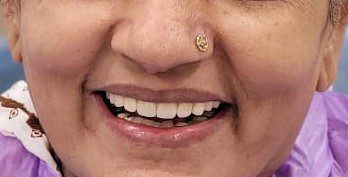
Diagnosis
Complete structural collapse of the upper arch, severe bone resorption, and loss of Vertical Dimension (VDO).
The Blueprint
Digital Smile Design (DSD) was used to re-calculate the patient’s ideal bite height before surgery.
3D CBCT MAPPING ACTIVEEngineering Solution
Placement of high-stability titanium implants followed by a custom-milled Zirconia bridge for 100% functional restoration.
Outcome
Total restoration of masticatory force and a 12mm “lift” in facial height, smoothing the lower facial profile.
What is involved in a full mouth reconstruction procedure?
A full mouth reconstruction is a comprehensive dental treatment plan that addresses all of the issues affecting the function and aesthetics of your smile. It is also sometimes referred to as a full arch reconstruction or a smile makeover.
The first step in any full mouth reconstruction is a thorough examination and consultation with your dentist. This will help to determine which specific treatments are needed to address your individual concerns. Once a treatment plan has been established, the next step is to begin the actual reconstruction process.
This can involve a wide variety of different procedures, depending on what exactly needs to be done.
Common treatments that may be used in a full mouth reconstruction include dental implants, veneers, crowns, bridges, and dentures. In some cases, orthodontic treatment may also be necessary.
The goal of a full mouth reconstruction is to restore function and aesthetics to your smile. This can have a profound impact on your overall quality of life.
If you are considering this type of treatment, be sure to consult with an experienced dentist who can help you create a custom treatment plan that meets your unique needs and goals.
Benefits of full mouth reconstruction
If you are considering full mouth reconstruction in New Delhi, it is important to understand the many benefits that this procedure can offer. Full mouth reconstruction can improve the function and appearance of your teeth and gums and can help you achieve optimal oral health.
- Full mouth reconstruction can correct a wide variety of dental problems, including misaligned teeth, missing teeth, tooth decay, gum disease, and more. This procedure can also help to improve the bite relationship between the upper and lower jaws.
- Full mouth reconstruction can give you a more attractive smile and boost your self-confidence. This procedure can also improve your oral health by making it easier to clean your teeth and gums and by preventing future dental problems.
- If you are considering full mouth reconstruction, be sure to consult with a qualified dentist who has experience performing this procedure. The dentist will be able to assess your individual needs and develop a treatment plan that is right for you.
The Science of Facial Restoration
Tooth wear and loss don’t just affect your bite—they accelerate facial aging. Full Mouth Reconstruction reverses this “Facial Collapse.”
Bite Collapse (VDO Loss)
- Sunken cheeks and thinning lips.
- Deepening of nasolabial (smile) folds.
- Premature wrinkles around the mouth.
- Jaw joint (TMJ) pain and headaches.
Oraa Care Rehabilitation
- Natural “Lift” of the lower facial third.
- Restoration of lip volume and support.
- Optimized jaw alignment and TMJ health.
- Engineered tooth height for a youthful smile.
The architecture of youth — restoring bite height (VDO)
When we lose teeth or wear them down through years of grinding (Bruxism), the distance between our nose and chin decreases. In clinical terms, this is a loss of Vertical Dimension of Occlusion (VDO).
The Science of “Facial Collapse”
Your teeth aren’t just for chewing; they are the structural pillars of your lower face. When these pillars shorten or disappear:
-
The “Sunken” Look: Without the support of teeth and the surrounding alveolar bone, the lips transition inward, making them look thinner.
-
The “Witch’s Chin”: As the bite collapses, the lower jaw (mandible) rotates forward and upward, making the chin appear more prominent and closer to the nose.
-
Deepening Nasolabial Folds: The “smile lines” around the mouth become deep creases because there is no longer a dental frame to keep the skin taut.
Reversing the Clock: The Prosthodontic Lift
At Oraa Care, Dr. Yogesh Rao (Prosthodontist) specializes in “re-establishing” this lost height. Using Digital Smile Design and 3D mapping, we calculate your ideal jaw position to:
-
Restore Facial Volume: By lengthening the teeth to their original biological height, we naturally “fill out” the lips and smooth out the lower face.
-
Decompress the TMJ: Restoring the bite height often relieves chronic jaw pain and headaches caused by a collapsed bite.
-
Engineered Aesthetics: We don’t just give you “long teeth”; we engineer a smile that supports your specific facial muscles and bone structure.
Types of procedures offered for full mouth reconstruction
When it comes to full mouth reconstruction, there are a variety of procedures that can be performed in order to achieve the desired results.
Some of the most common procedures that are offered for full mouth reconstruction include:
- Dental Implants: Dental implants are one of the most popular options for full mouth reconstruction, as they provide a long-lasting and natural-looking solution. Dental implants can be used to replace one or more missing teeth, and can even be used to support dentures.
- Tooth whitening: Tooth whitening is often recommended for patients who have discolored teeth. This procedure can help to brighten the smile and boost confidence.
- Porcelain veneers: Porcelain veneers are another popular option for full mouth reconstruction, as they can be used to correct a wide range of aesthetic concerns. Veneers are thin pieces of porcelain that are bonded to the front surfaces of the teeth and can be used to cover up cracks, chips, gaps, and other imperfections.
- Invisalign: Invisalign is a great option for patients who want to straighten their teeth without traditional braces. This treatment uses clear aligners that are virtually invisible, making it a great option for adults who want to maintain a professional appearance.
How much does a full mouth reconstruction cost?
FMR at Oraa Care is priced based on the precision of digital milling and the biocompatibility of the materials used (Zirconia).
The long-term benefits of a full mouth reconstruction far outweigh the initial cost.
For many people, the thought of undergoing a full mouth reconstruction can be daunting. It is important to remember that you are not alone in this decision.
There are many experienced and qualified dental professionals who can help you through the process. You should consult with several different surgeons to get an idea of what the procedure will entail and what the associated costs will be.
What to look for when choosing a dentist?
When it comes to choosing a dentist, there are a few factors you will want to take into consideration. Here are a few things to look for when making your decision:
- Ensure your clinic is NABH Accredited and led by a Prosthodontist for full-arch cases.
- Check that the dentist is registered with the Dental Council of India and has the necessary qualifications.
- Ask about the cost of treatment and whether there are any discounts or payment plans available.
- Find out what type of anesthesia will be used during your procedure and whether you will be able to have sedation if needed.
- Ask about the post-treatment care that will be required and how long you can expect the results to last.
Questions to ask your dentist before starting treatment
Before you start any treatment with your dentist, it’s important to ask a few questions. This will help you understand the procedure better and also ensure that you are on the same page with your dentist.
Here are some questions to ask your dentist before starting full mouth reconstruction:
- What is the estimated cost of the treatment?
- What is the expected duration of the treatment?
- What are the risks and complications associated with the treatment?
- What are the possible side effects of the treatment?
- How will the results of the treatment be monitored?
Post-treatment care and maintenance advice
Once you have completed your full mouth reconstruction, it is important to follow your dentist’s post-treatment care and maintenance advice to ensure the best possible results.
Here are some tips to help you care for your new smile:
- Brush your teeth twice a day with a soft-bristled toothbrush.
- Floss daily.
- Use a mild mouthwash.
- Eat a balanced diet and avoid sticky, sugary foods.
- See your dentist regularly for checkups and cleanings.
Conclusion
Full mouth reconstruction can be a great way to improve your smile and restore the function of your teeth. It involves various treatments such as crowns, veneers, implants, bridges, and more that can help you achieve the results you desire.
With the right dentist and careful consideration of all aspects involved in this procedure, full mouth reconstruction can give you a beautiful new smile that will last for years to come.
Mirror Test: Is Your Bite Collapsing?
Stand in front of a mirror and smile. If you identify with 2 or more of these signs, your oral architecture may be at risk.
When you speak or smile normally, your upper teeth are barely visible or completely hidden by your lip.
Your teeth appear short, square, or jagged at the edges due to years of grinding or acid erosion.
Your lips look thinner than they used to, and the area between your nose and chin looks “compressed.”
You experience frequent clicking in the jaw joint or headaches upon waking up in the morning.
Identified these signs? Don’t wait for total structural failure.
REQUEST A CLINICAL EVALUATION